





In the world of fine jewelry, few debates are as persistent as the comparison between cubic zirconia and lab-grown diamonds. For the independent designer, boutique studio, or discerning consumer, understanding this distinction is essential—especially when the visual similarities can be so striking.
At CZDIA, we believe in empowering our customers with knowledge. Whether you’re considering a stunning piece of CZ jewelry for its brilliance or evaluating a lab-grown diamond for its pedigree, knowing the fundamental differences between cubic zirconia and lab-grown diamonds ensures you make the right choice for your needs. This guide breaks down the key differences between cubic zirconia and lab-grown diamonds.
1. The Foundation: What Are Cubic Zirconia and Lab-Grown Diamonds Made Of?
The most significant difference lies in their very composition.
Lab-Grown Diamonds are chemically, physically, and optically identical to natural diamonds. They are made of pure crystallized carbon and share the same cubic crystal structure. Whether created through High Pressure High Temperature (HPHT) or Chemical Vapor Deposition (CVD), the result is a real diamond. As the Federal Trade Commission and the GIA confirm, they are classified as diamonds, just with a different origin.
Cubic Zirconia (CZ) is a synthetic gemstone composed of zirconium dioxide (ZrO₂) . It is a diamond simulant, meaning it visually resembles a diamond but is made of entirely different materials. Interestingly, CZ was first perfected in the 1970s and has since become the most popular diamond imitation on the market. This is the primary distinction when comparing cubic zirconia and lab-grown diamonds at the molecular level.
2. Durability: Which Lasts a Lifetime Between Cubic Zirconia and Lab-Grown Diamonds?
For a piece meant to last, durability is paramount. This is one area where cubic zirconia and lab-grown diamonds differ dramatically.
-
Lab-Grown Diamonds: Score a perfect 10 on the Mohs hardness scale, making them the hardest known natural material. A lab-grown diamond is exceptionally durable, resistant to scratching, and will retain its polish and brilliance for generations.
-
Cubic Zirconia: Ranks significantly lower, at 8 to 8.5 on the Mohs scale. While this may seem like a minor difference, it is crucial. CZ is much more susceptible to scratching from everyday activities and household dust, and it can absorb oils from the skin, leading to a cloudy, worn appearance over time. With regular daily wear, a CZ typically shows noticeable wear after about two years. This difference in longevity is a key factor when choosing between cubic zirconia and lab-grown diamonds.
3. Appearance: Fire, Brilliance, and Color of Cubic Zirconia and Lab-Grown Diamonds
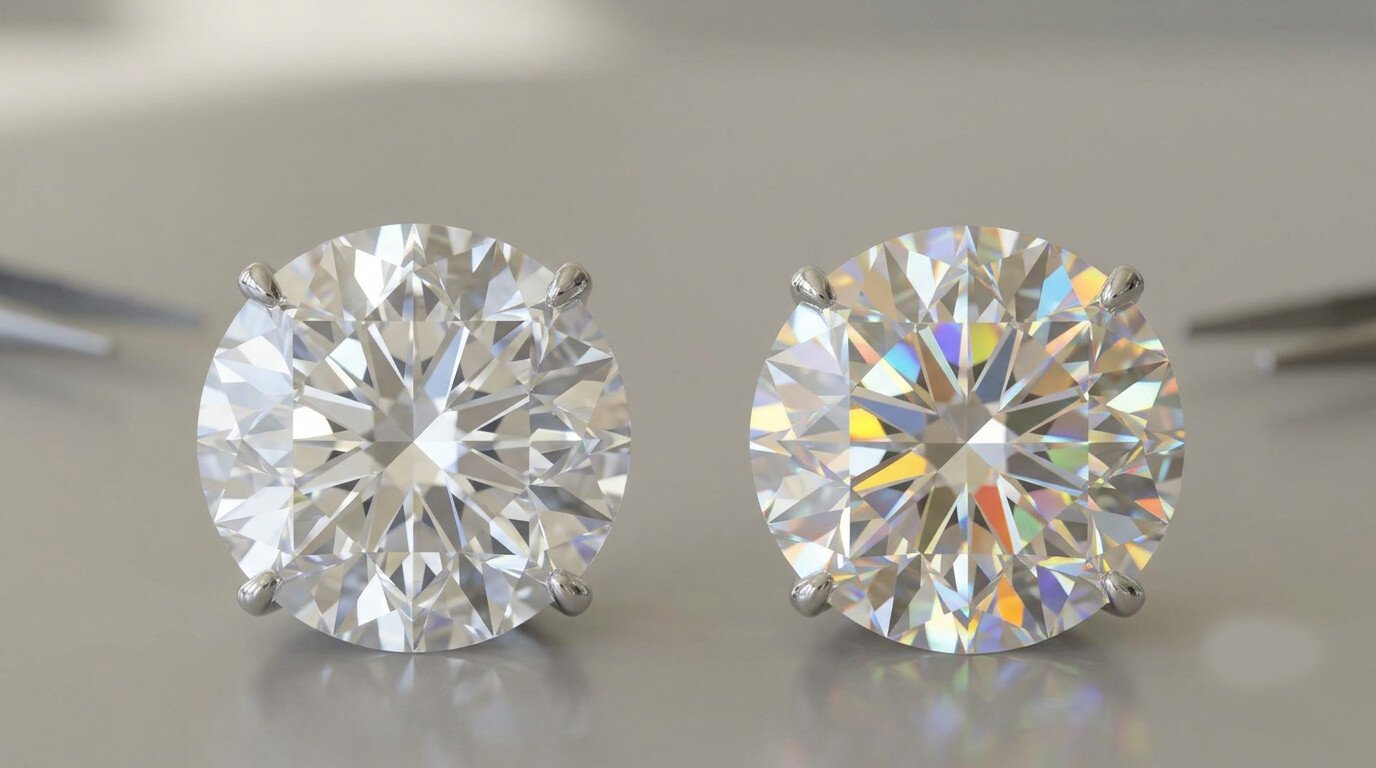
Both stones are visually stunning, but they display light differently. When comparing cubic zirconia and lab-grown diamonds side-by-side, the visual cues are telling.
-
Brilliance vs. Fire: Diamonds are renowned for their exceptional brilliance (the reflection of white light) and a subtle, balanced fire (the dispersion of colored light). Cubic zirconia, however, has a higher dispersive power (0.060 vs. diamond’s 0.044), meaning it often displays more prismatic “fire” with noticeable rainbow flashes of color. While some find this appealing, it’s often a key giveaway that distinguishes CZ from a diamond.
-
Color: Most natural and lab-grown diamonds have slight traces of yellow or brown, with truly colorless stones being rare and costly. In contrast, CZ can be made almost entirely colorless, often equivalent to a perfect “D” color grade on the diamond scale. However, CZ can also be manufactured in a wide array of colors to imitate fancy colored diamonds or other gemstones.
-
Clarity: Lab-grown diamonds, like natural ones, can have internal flaws or inclusions. CZ is typically produced with no internal flaws and is virtually flawless. Instead, it may exhibit telltale signs of its manufacture, like tiny gas bubbles.
4. Longevity and Value: How Cubic Zirconia and Lab-Grown Diamonds Compare
-
Lab-Grown Diamonds: Are a lasting investment in beauty and durability. They will not cloud, scratch, or degrade with proper care and can be a meaningful heirloom. Their value, while lower than natural diamonds, is significant and enduring.
-
Cubic Zirconia: Is a beautiful but more ephemeral choice. It is an excellent option for fashion-forward pieces or those on a tight budget, but it is not intended for lifelong daily wear. Its value is extremely low compared to diamonds. This makes the cost difference the most practical deciding factor between cubic zirconia and lab-grown diamonds.
At a Glance: Cubic Zirconia vs. Lab-Grown Diamonds
| Feature | Cubic Zirconia (CZ) | Lab-Grown Diamond |
|---|---|---|
| Composition | Zirconium Dioxide (ZrO₂) | Pure Crystallized Carbon (Diamond) |
| Hardness (Mohs) | 8 to 8.5 | 10 |
| Durability | Prone to scratching and clouding over time | Exceptionally durable; scratch-resistant for a lifetime |
| Light Performance | Higher fire (more rainbow flashes) | Superior brilliance, more subtle and balanced fire |
| Color | Often perfectly colorless (D-grade) or any color | Varies; can be colorless, near-colorless, or fancy colors |
| Clarity | Typically flawless | Varies; may contain inclusions like natural diamonds |
| Longevity | ~2 years of daily wear before noticeable wear | Can last a lifetime or more |
Conclusion: Choosing Between Cubic Zirconia and Lab-Grown Diamonds
The choice between cubic zirconia and lab-grown diamonds ultimately depends on your priorities.
For a piece you intend to wear daily for years to come and value for its durability and status, a lab-grown diamond is the superior choice. It offers the beauty and permanence of a real diamond at a more accessible price point than its natural counterpart.
For a stunning, budget-friendly piece of fashion jewelry, or to test out a bold new design, cubic zirconia offers a brilliant, affordable alternative. At CZDIA, we believe in the beauty of both. That’s why we specialize in the finest grade 5A+ cubic zirconia, providing the exceptional brilliance and fire that makes CZ such a beloved gemstone, whether for a single custom center stone or a wholesale order.
We are committed to democratizing access to premium jewelry materials. Whether you choose the enduring heritage of a lab-grown diamond or the dazzling, accessible brilliance of our premium cubic zirconia, the power to create beautiful jewelry is in your hands. Understanding the true differences between cubic zirconia and lab-grown diamonds is the first step to making that power your own.


 English
  العربية
  Nederlands
  Français
  Deutsch
  Ελληνικά
  Bahasa Indonesia
  Italiano
  日本語
日本語  Português do Brasil
  Português
  Русский
  Español de México
  Español
  Українська
  Tiếng Việt